
Choosing the right Custom Cosmetic Packaging Boxes is no longer a purely visual decision. A box must protect glass bottles, support brand identity, and reduce unnecessary material. Grand View Research valued the global cosmetic packaging market at approximately $32.74 billion in 2023, with continued growth expected through 2030. This expansion creates opportunity, but it also increases competition on crowded retail shelves.
Packaging specialist David Luttenberger has described packaging as “the silent salesman.” That idea remains practical. A rigid drawer box, soft-touch sleeve, or recyclable folding carton can influence how customers judge a serum before opening it. The details matter: a lid that closes cleanly, an insert that prevents movement, and printing that stays sharp near oily products.
Sustainability matters too. Smithers’ report, The Future of Sustainable Packaging to 2028, identifies material efficiency, recyclability, and responsible sourcing as major packaging priorities. However, “eco-friendly” should not become an empty label. A recyclable box with excessive layers may still create avoidable waste. That is where many brands need to think again.
This guide presents seven practical tips for selecting Custom Cosmetic Packaging Boxes. It considers product dimensions, structural strength, finishes, printing quality, minimum order quantities, sustainability, and total cost. Small brands may need flexible suppliers. Larger brands may prioritize consistency across thousands of units. Neither choice is automatically better.
The goal is not the most expensive box. It is the most suitable one. Good packaging feels intentional, protects the product, and communicates trust before the first use.
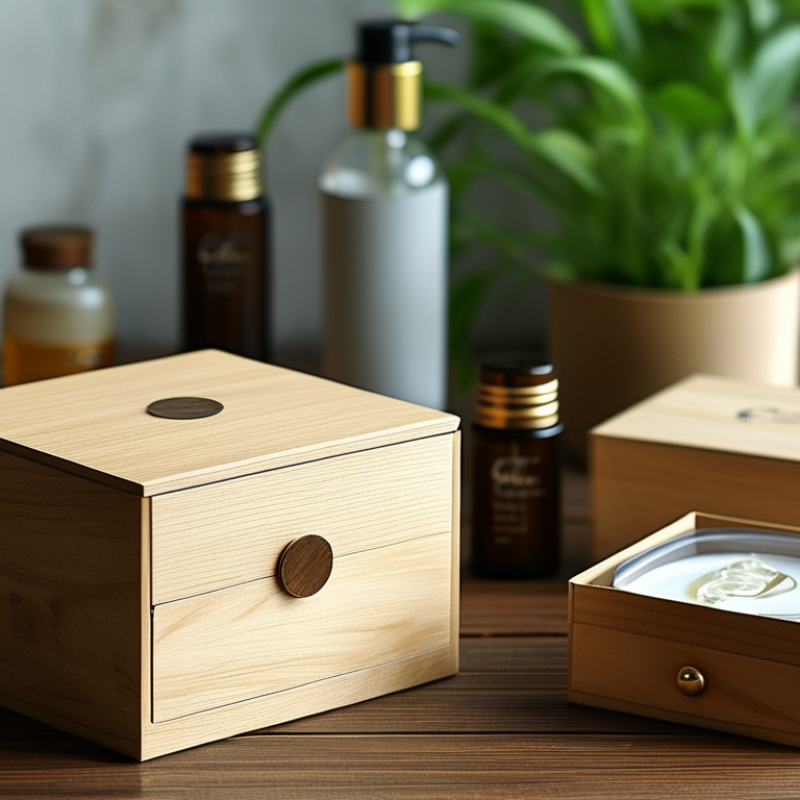
Before choosing a custom cosmetic packaging box, define the product precisely. Is it a glass serum bottle, a soft tube, or a compact powder case? Each format needs different protection, fit, and internal support. Measure the product, closure, and applicator. Add space for cushioning, but avoid a loose fit. Grand View Research estimates the global cosmetic packaging market reached USD 32.43 billion in 2023. This growth increases competition for shelf visibility and dependable packaging performance.
Your audience should guide the box’s appearance and usability. A premium skincare buyer may value rigid board, quiet colors, and a smooth opening. A younger audience may prefer compact structures and easy recycling. Research from McKinsey indicates that consumers increasingly expect packaging to support sustainability claims. Avoid vague words such as “green.” Specify the material, recycled content, or recycling pathway. Check the claim with suppliers and local requirements.
Packaging requirements must include more than appearance. Confirm board thickness, printing method, coating, insert design, moisture resistance, and shipping conditions. Request a physical sample. Test it beside the product. Drop it, open it repeatedly, and inspect scuffing. My practical mistake was approving a beautiful prototype before testing warehouse handling. It looked excellent. It failed too easily. A better specification includes target cost, order quantity, production tolerance, lead time, and acceptable defects. Your first brief may be incomplete. Treat it as a working document, not a final answer.
7 Tips for Choosing Custom Cosmetic Packaging Boxes?
Choose board strength before choosing surface beauty. In packaging trials, I have seen delicate cartons crease around the window. Use rigid board for heavier jars, and folding carton stock for lighter tubes. Match the box size closely to the product. Extra space increases filler, shipping volume, and cost.
Choose recycled content, but verify its performance. Recycled fibers can absorb moisture and reduce print consistency. That trade-off needs testing. Prefer recyclable paper structures when local recovery systems can process them. Avoid unnecessary plastic laminates, metallic films, and mixed-material inserts. The OECD Global Plastics Outlook reports that packaging creates about 40% of global plastic waste. Smaller material choices matter. Ask suppliers for recycled-content evidence and responsible fiber documentation. Do not rely on vague “eco” claims.
Test the box under compression, vibration, humidity, and drop conditions. A sustainable package that damages cream jars is not sustainable in practice. Request material specifications, ink details, and third-party test records. Compare total cost, including production waste and freight, not only the unit price. A 2023 McKinsey sustainability survey found that 60–70% of consumers say they would pay more for sustainable packaging, yet actual purchase behavior may differ. That gap deserves caution. Sustainability can be improved, but it is rarely perfect. Recheck the design after sampling.
7 Tips for Choosing Custom Cosmetic Packaging Boxes
Custom cosmetic packaging should make the product recognizable before the box is opened. Strong branding comes from consistent colors, readable typography, and one memorable visual detail. Avoid filling every panel with graphics. A calm front panel often looks more premium and improves shelf recognition.
Tip: Match the structure to the product. A glass bottle needs a snug insert, while a compact may need less internal space. Measure the item, cap, and protective padding together. In real packaging evaluations, small gaps often become costly problems during transport. A perfect digital mockup can still fail. Request a physical sample and test opening, closing, stacking, and handling. I once underestimated how quickly a loose insert could damage the presentation.
Tip: Design the unboxing journey. Use a clean opening sequence, secure folds, and a short message beneath the lid. Tissue paper, molded pulp, or a simple pull tab can add texture without creating unnecessary waste. The sound of opening matters, too. It should feel controlled, not noisy or difficult. Check whether customers can remove the product without tearing the box or dropping it.
Tip: Confirm technical details with the packaging supplier. Ask about board thickness, coating durability, print accuracy, and color consistency across batches. Keep artwork files organized and approve a signed sample before production. Sustainable materials can support a trustworthy image, but only when their performance matches the product’s weight and storage conditions. The design may need another revision. That is normal.
| Tip | Primary Focus | Recommended Specification | Practical Data or Benchmark | Why It Matters | Quality Check |
|---|---|---|---|---|---|
| 1 Define the product and customer profile | Strategy | Record the product dimensions, net weight, closure type, target price point, retail channel, and expected shipping conditions before developing the box. | Allow approximately 3–8 mm of internal clearance around the product, depending on the insert and protective material. | A clear specification reduces unnecessary material, prevents loose fit, and helps the packaging match the product's perceived value. | Test the packed product for movement, abrasion, and lid interference during opening and closing. |
| 2 Build a consistent visual identity | Branding | Use a controlled palette of two to four main colors, one primary typeface, and a repeatable logo or pattern placement across box sizes. | Keep important text at least 3–5 mm inside the trim line and maintain a minimum text size of about 6–7 pt for small printed details. | Consistent hierarchy makes product information easier to scan and improves recognition across shelves, parcels, and online product photography. | Review a physical proof under daylight and indoor lighting to check contrast, alignment, color consistency, and legibility. |
| 3 Select a board grade suited to the product | Structure | Choose paperboard based on box size, product weight, stacking pressure, moisture exposure, and whether an insert is required. | Typical folding-carton board is often specified in the range of 250–400 gsm; heavier or larger boxes may require thicker board or a rigid-board construction. | Board selection affects compression strength, fold performance, print quality, shipping durability, and total package weight. | Inspect creases for cracking, check panel flatness, and perform repeated opening tests on the finished carton. |
| 4 Match the insert to the product shape | Protection | Use a die-cut paperboard insert, molded fiber insert, or fitted tray when bottles, jars, palettes, or tubes can shift inside the box. | Keep the product centered and provide stable contact points without placing concentrated pressure on caps, pumps, glass edges, or decorative surfaces. | A fitted insert reduces rattling, scuffing, leakage risk, and breakage during handling and parcel transportation. | Conduct a vibration and drop evaluation using the actual product, closure, insert, and final shipping configuration. |
| 5 Choose finishes that support the design | Surface Finish | Select matte or gloss coating, soft-touch film, embossing, debossing, foil, or spot varnish only where each effect supports the visual hierarchy. | Use a combination of approximately one to three special effects to avoid visual competition and unnecessary production cost. | Finishing can highlight a logo, product name, texture, or premium detail while also influencing scratch resistance and tactile perception. | Check adhesion, rub resistance, fingerprint visibility, foil registration, embossing depth, and color match on a production-quality sample. |
| 6 Design the unboxing sequence | Unboxing | Consider magnetic closures, tuck flaps, pull ribbons, sleeves, reveal panels, thank-you cards, or layered inserts according to the product's price and use. | Keep the opening sequence intuitive: the customer should identify the opening point within a few seconds and remove the product without excessive force. | A controlled reveal can improve perceived value, encourage product sharing, and reduce frustration during the first interaction with the package. | Ask several users to open the package without instructions and record opening time, damaged components, and points of confusion. |
| 7 Validate sustainability and shipping performance | Compliance | Prefer recyclable paper-based components where practical, minimize mixed materials, and avoid oversized boxes that require excessive filler. | Target a close product-to-box fit and clearly identify any coatings, films, magnets, foams, or adhesives that may affect recycling or disposal. | Material transparency supports disposal decisions, while efficient sizing reduces dimensional shipping volume and unnecessary packaging waste. | Confirm material specifications, recycling marks, supplier declarations, packed dimensions, gross weight, and transport-test results before approval. |
Choosing custom cosmetic packaging boxes requires more than attractive artwork. Verify customization quality with a physical proof, not only a digital file. Check color consistency, edge sharpness, foil adhesion, and print alignment under normal store lighting. Request the final dieline and confirm measurements with the actual bottle, jar, or tube. A few millimeters matter.
Test the box after repeated opening, closing, and handling. Inspect corners for crushing. Ask for material thickness, coating details, and adhesive specifications. If possible, perform a small drop and humidity test. Cosmetic packaging may meet expectations in a studio, then soften in a bathroom. That failure is easy to miss.
Functionality must support safe use and efficient distribution. The insert should prevent movement without making removal frustrating. Barcodes need clear contrast and reliable scanning. Regulatory compliance requires careful review for each sales market. Check ingredient references, net quantity, responsible-party details, batch coding space, warnings, and recycling statements.
Rules differ by country and product type, so consult a qualified compliance professional. Do not rely on informal assurances. Request material declarations, ink and coating information, test records, and documented quality checks. Keep approved samples and revision histories. This creates traceability when colors, suppliers, or formulas change.
Imperfect prototypes are useful. They reveal weak closures, unreadable text, and unrealistic claims before mass production. A polished box is not enough. It must protect the product, communicate accurately, and remain dependable through storage, shipping, and retail handling.
Supplier comparison should begin with specifications, not attractive samples. Request the same dimensions, paperboard grade, finish, insert, and delivery terms from at least three suppliers. Grand View Research valued the global cosmetic packaging market at approximately $32.5 billion in 2023, showing strong demand but also intense supplier variation. Ask for material certificates, production photos, quality-control procedures, and a physical prototype. A beautiful sample proves little if its corners crush during transport.
Pricing changes sharply with quantity, printing colors, coatings, and tooling. Request a full cost breakdown, including plates, molds, setup fees, freight, and taxes. Minimum orders often become the hidden problem. A low unit price may require 5,000 boxes, while a smaller run costs more per box. My first comparison focused too heavily on unit price. That was a mistake. Check the total landed cost instead. Keep a 5–10% allowance for defects, testing, and future design changes.
Production timelines need written milestones. Confirm artwork approval, sampling, bulk manufacturing, inspection, and shipping dates separately. Packaging Machinery Manufacturers Institute reports that supply-chain delays continue influencing packaging procurement decisions. Allow extra time for custom inserts or special finishes. Ask what happens if materials arrive late. Never accept “about three weeks” without a dated schedule. The schedule matters. Recheck every assumption before paying a deposit.
: Identify the product format, closure, applicator, dimensions, and weight. Measure the bottle, jar, or tube carefully. Add cushioning space, but avoid a loose fit. Fit matters.
Match the structure, colors, opening experience, and materials to customer expectations. Premium buyers may prefer rigid board and quiet colors. Younger customers may value compact designs and easy recycling. Preferences can change.
Use rigid board for heavier jars and folding cartons for lighter tubes. Choose board strength before decorative finishes. A beautiful carton can still crease or collapse.
Prefer recyclable paper structures that local recovery systems can process. Verify recycled content and responsible fiber documentation. Avoid unnecessary plastic laminates, metallic films, and mixed-material inserts. “Eco” alone proves little.
Test compression, vibration, humidity, drops, and repeated opening. Place the real product inside during testing. Inspect crushed corners, scuffing, movement, and softened surfaces. Test it.
Request a physical proof and the final dieline. Check color consistency, print alignment, edge sharpness, and decorative adhesion. Review the sample under normal store lighting. Digital files can mislead.
The insert should prevent movement without making product removal frustrating. Confirm barcode contrast and scanning reliability. Check the box after repeated handling and opening. Protection must feel practical.
Review ingredient references, net quantity, responsible-party details, warnings, and batch-code space. Check recycling statements for each sales market. Requirements vary by country and product type. Informal assurances are not enough.
Compare unit price, production waste, freight, tooling, testing, and minimum order quantity. A smaller box may reduce filler and shipping volume. A cheaper material may increase damage costs. Low price is not always value.
Do not approve a beautiful prototype before warehouse and shipping tests. I once accepted an attractive sample that failed during handling. Keep approved samples and revision records. The first brief may be incomplete.
Choosing the right Custom Cosmetic Packaging Boxes starts with a clear understanding of your product, target audience, and practical packaging requirements. Consider the product’s size, shape, weight, fragility, and storage conditions before selecting materials. A well-balanced choice should provide reliable protection, support sustainability goals, and remain within budget. At the same time, the packaging should communicate your visual identity through thoughtful colors, typography, finishes, and structural details that create a memorable unboxing experience.
Before placing an order, carefully evaluate customization quality, box functionality, print accuracy, durability, and applicable packaging regulations. Request samples to check dimensions, assembly, protection, and overall appearance. It is also important to compare suppliers based on material options, pricing, minimum order quantities, production capacity, communication, and delivery schedules. By reviewing these factors together, you can choose packaging that protects cosmetic products, strengthens presentation, improves customer satisfaction, and supports efficient long-term purchasing decisions.
